Organizer: CITLoB (Confederation of Interpreting, Translation and Localization Businesses)
Samvād 2026: AI, Language and India’s Multilingual Growth
Mumbai, October 26, 2026
Samvad is an interesting conference that brings Indian LSPs, localization teams from major multilingual organizations, and AI experts together to share knowledge and experience across a wide range of enterprise and governmental use cases, as well as share state-of-the-art information on AI initiatives that are being deployed at scale across the Indian landscape.
India has a structural language diversity (over 200 languages with 22 “primary” languages that the government has focused on) that provides it with a long-term rationale to explore the technological possibilities of being multilingual at scale.
Given the strategic support of several government initiatives to support training data collection, provide compute and software infrastructure, with a willingness to deploy indigenous technology across high-value social use cases that already benefit millions of users.
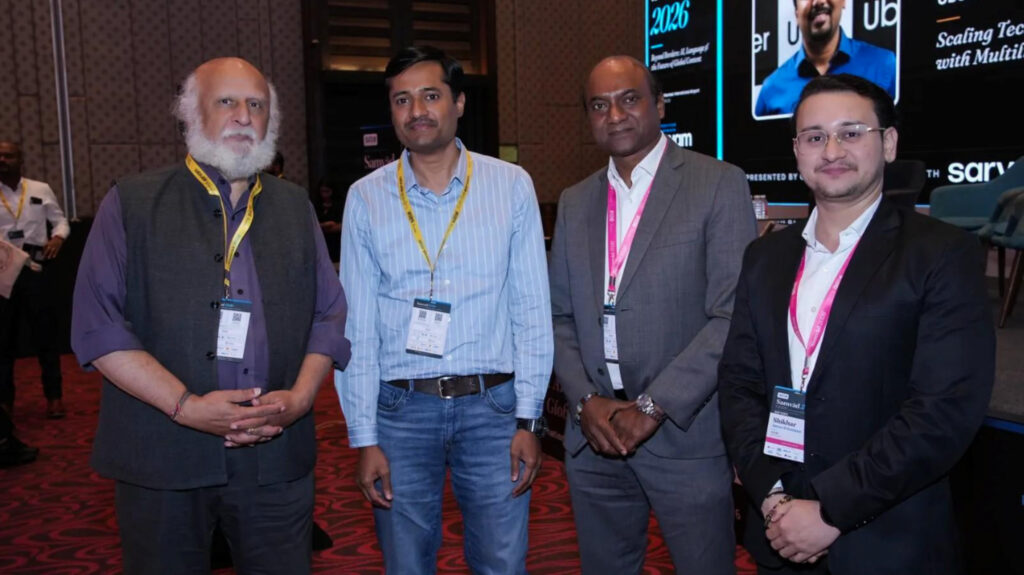
Samvād means dialogue.
On October 26 at Mumbai’s Holiday Inn, CITLoB hosted Samvād 2026: Global Multilingual Ecosystem Summit. Themed “Beyond Borders: AI, Language & the Future of Global Content,” the event brought together localization leaders, enterprise executives, and LSPs.
The single-day summit focused on generative AI, language technology, and digital inclusion, examining how Indian organizations can scale globally while improving digital access domestically.
Program Highlights
- Opening Keynote: Bruno Hermann (Vice-Chairman of LT-Innovate) kicked off the summit with an address on leading strategic multilingual and product operations, setting the tone for sustainable, tech-augmented growth. His opening keynote positioned strategic multilingual operations as a contributor to India’s economic growth.
- Scaling Indian LSPs Internationally: Moderated by Pallavi Kulkarni (RWS), industry leaders including Translated, Nimdzi, and Knowledgeworks dissected the AI disruption curve, analyzing how Indian LSPs can move up the value chain from back-office processing to strategic, tech-enabled partnerships.
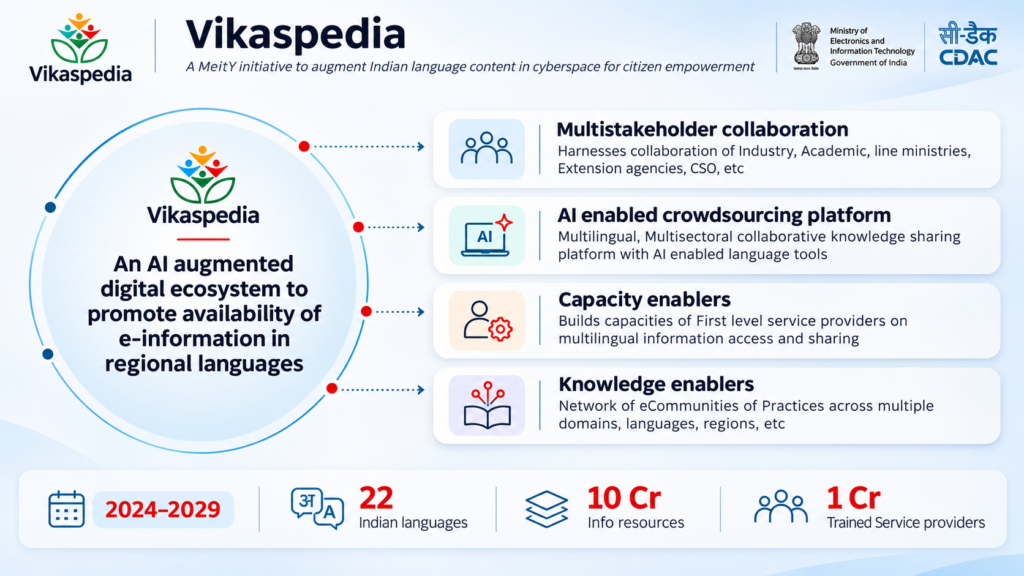
- Indian language content for Citizen Empowerment: CDAC provided an overview of critical digital enablement work they are doing, e.g., the Vikaspedia project highlighted in the slide below:
- An enterprise panel featured representatives from Uber, ServiceNow, and OpenText discussing global product expansion. Together, these sessions connected the industry’s changing service model with the practical demands of multilingual products and customer experience.
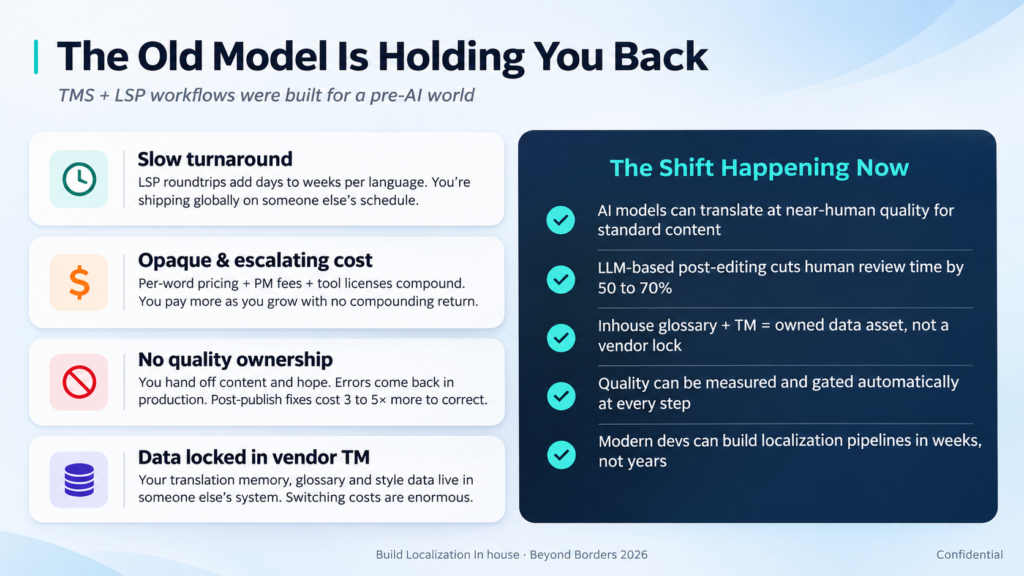
- Winning Enterprise Localization Strategy: by Deepak N (ex-Dell) of RingCentral explored Build vs Buy strategies for global enterprise teams, made us ponder about the changing roles in localization teams (more technical and less project management) and the increasing shift to build, especially for TMS-type capabilities. “The shift from outsourced black boxes to in-house data ownership and automated pipelines is well underway. Localization is shifting from isolated, manual vendor handoffs to continuous, developer-led pipelines integrated directly into product CI/CD. “
- Next Billion Users & Regional Content: Moderated by Noopurr Shuklaa (Deluxe), panelists Arijeet Satapathy (Sarvam AI), Vivek Lath (GoQuest Media), and Atul Anand (Medtronic) analyzed the role of localization across OTT platforms, vernacular banking, healthcare, and digital public infrastructure.
This was paired with a dedicated session by Siddharth Singh of Sarvam AI. A key message: “Why do we train AI models? Because Accumulated Judgment Is the Moat.” Sarvam AI has outperformed several global models (from OpenAI, Google, ElevenLabs, Deepgram, and others) on India-specific tasks involving Indic languages.
Sarvam’s models are purpose-built for Indian languages (often covering all 22 scheduled languages plus English), with training data, tokenizers, and architectures optimized for code-mixed speech (e.g., Hinglish), regional accents/dialects, noisy telephony audio, multi-script documents, and cultural context—areas where general-purpose frontier models (trained primarily on high-resource languages) tend to lag.
These gains come from India-first data pipelines, synthetic data generation, and specialized training rather than simply scaling general models. Some tools were also co-developed with users and thus were eagerly used at scale.
Sarvam’s Voice Agents platform moved beyond pilots into production at population scale, particularly for voice and conversational AI in Indian languages:
- It has powered hundreds of millions of conversations (reports cite 100M+ to 350M+ real enterprise conversations) and high daily volumes (e.g., over 1 million minutes of interactions per day at peak growth stages).
The “Cyborg Linguist” Consensus: Rather than viewing Large Language Models as an existential threat, discussions reinforced that human judgment, domain nuance, and cultural context are more vital than ever in high-stakes enterprise workflows. The attitude
- India as an AI-Data Hub: Attendees noted India’s unique vantage point—combining deep linguistic diversity across 22+ official languages with high-volume technical capabilities required to train, evaluate, and benchmark multilingual LLMs.
- Reconnection and Collaboration: The summit fostered direct peer exchange among traditional LSP founders, global enterprise buyers, and homegrown AI startups, underscoring CITLoB’s role as the unified voice of the subcontinent’s language economy.
Community recognition and relationship-building complemented the business agenda. I expect that this event will gain momentum and grow in strength and impact, and could become a key South Asian event in the future .