The group produced a document calling on the Pope and global leaders to uphold key principles and boundaries to guide dialogue on how AI can best serve humanity.
Translated’s CEO Joins AI Leaders to Advise the Pope on AI-related issues
Rome – September 15, 2025
In the global debate on the impact of artificial intelligence, one certainty is emerging. AI has the potential to accelerate scientific discovery and deepen mutual understanding across cultures and societies. This view is increasingly recognized by global leaders and lies at the core of Translated’s work.
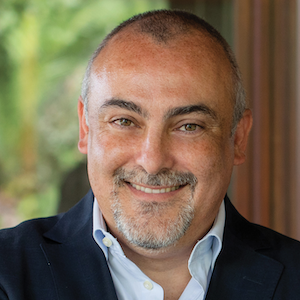

“There is no fraternity without mutual understanding. There is no mutual understanding without translation. AI and machine translation can allow a giant step forward in this direction, and we are committed to making this happen.”
This debate is no longer academic. It is shaping how institutions act. Since his election, Pope Leo XIV has shown great sensitivity toward artificial intelligence, noting the similarities between his pontificate and that of Leo XIII, the author of the encyclical Rerum Novarum, whose “new things” today take the form of artificial intelligences.
During the World Meeting on Human Fraternity, a working group on artificial intelligence was formed to advise Pope Leo XIV on AI-related issues. Our CEO, Marco Trombetti, was invited to join the group.
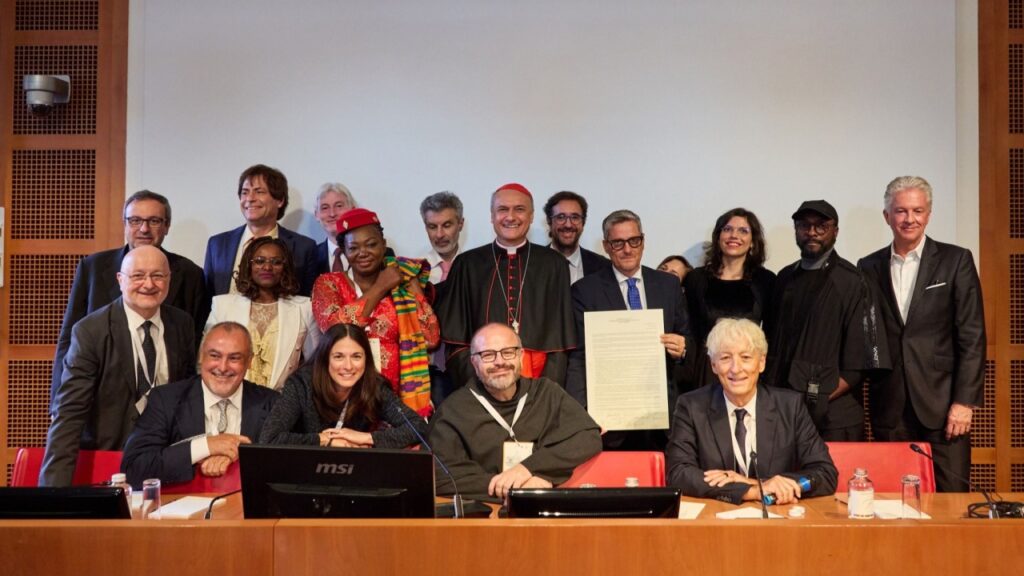
Marco actively contributed to drafting the global “Appeal for Peaceful Human Coexistence and Shared Responsibility,” a joint effort involving with Nobel laureate Geoffrey Hinton, Turing Award laureate and the most cited living scientist Yoshua Bengio, researcher Alexander Waibel, Berkeley professor Stuart Russell, physicist Max Tegmark, activist Nnenna Nwakanma, cognitive scientist Abeba Birhane, lawyers Jimena Sofía Viveros Álvarez, and Ernesto Belisario, journalist Riccardo Luna, and Father Paolo Benanti, who coordinated and chaired the group, alongside other prominent thinkers.
Among other points, the group’s final document calls on the Pope and global leaders to uphold key principles and boundaries to guide dialogue on how AI can best serve humanity.
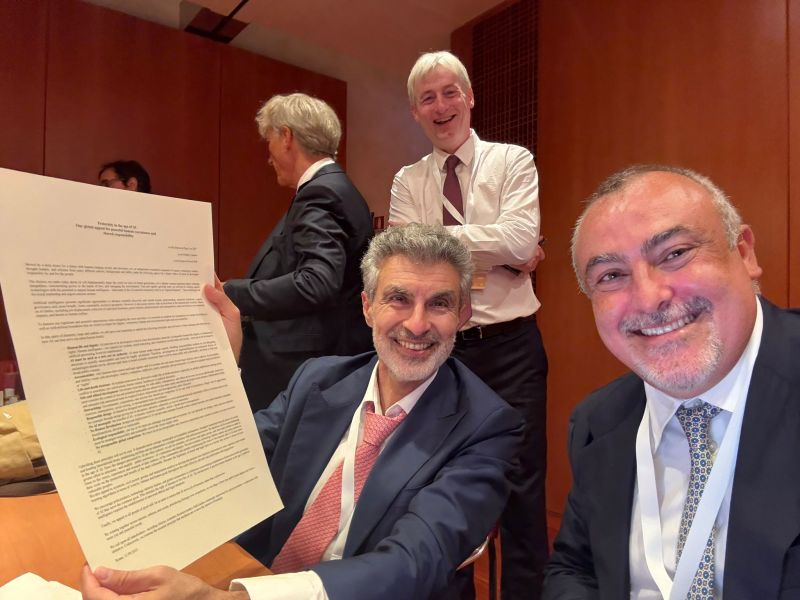
The document recognizes that “artificial intelligence presents significant opportunities to advance scientific discovery and mutual human understanding” and states that “AI must be developed responsibly by and for the people.”
This vision mirrors Translated’s conviction behind our research on adaptive AI to support professional translators: Humans and machines are better together.