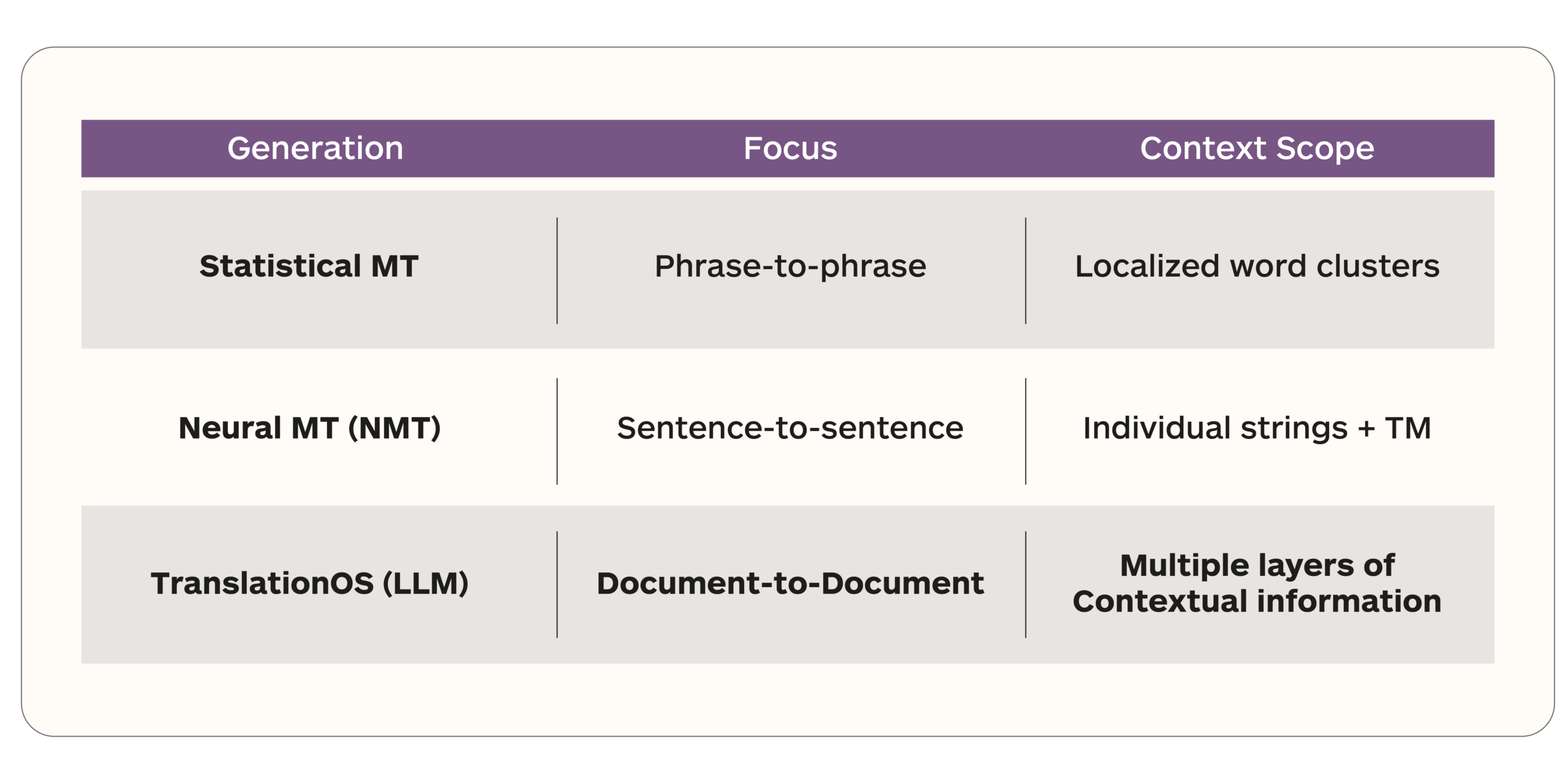
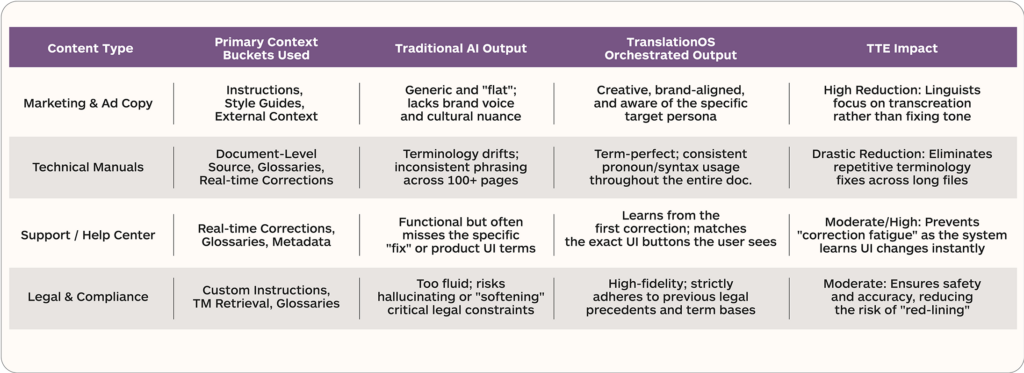
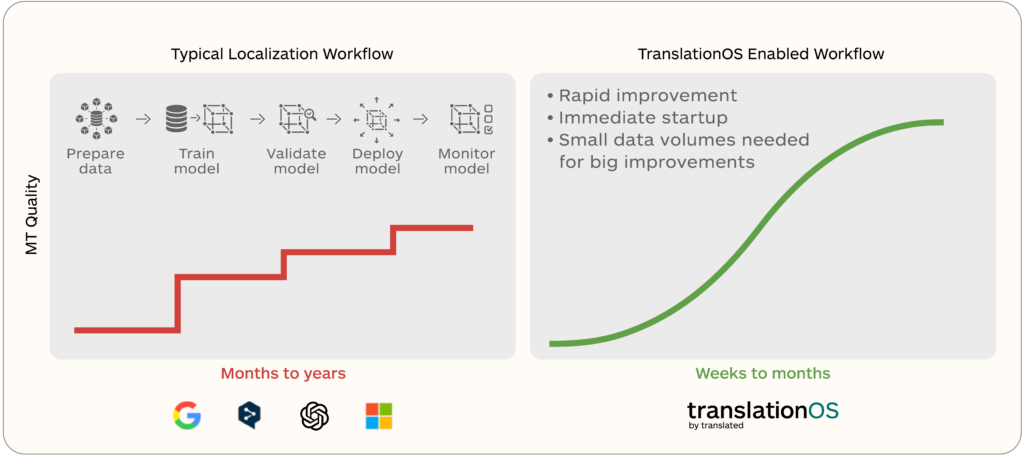
The initial goal is to achieve better quality output. However, the more complex, second challenge is something which most localization workflows overlook, remains.
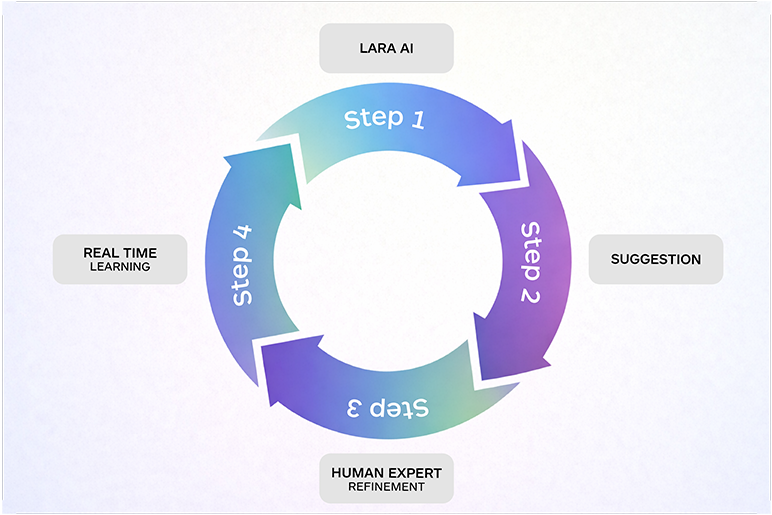
Today, human expertise and AI capability typically function in isolation rather than collaboration. The AI generates content, and a human then corrects it. This correction is stored in a Translation Memory (TM) but doesn’t immediately inform the AI. The model often doesn’t see these corrections until it is retrained, sometimes months later, or not at all. This is the reality of most enterprise localization systems, which results in static quality between model updates. The system gains no intelligence even after processing millions of words.
True improvement, conversely, demands an immediate, continuous, and two-way feedback loop.
In an optimal system, translator corrections instantly feed back into the model. Terminology and brand voice preferences are incorporated immediately, even within the current job. Every human decision: correction, preference, or stylistic choice is captured and used to refine the next suggestion, segment, and project. This continuous feedback cycle improves quality and decreases the time needed for editing with each successive project.
This dynamic defines human-machine symbiosis: the AI is built upon human expertise and is continually enhanced by it. Translators move beyond merely reviewing machine output; they become teachers whose input makes the system smarter. The relationship is mutually beneficial. The AI manages the scale of complexity and repetition, allowing translators to concentrate on nuance and critical judgment. Translators refine the AI and teach it the specific standard of “good” for your brand. Both sides gain value from the other.
TranslationOS is founded on a core architectural principle: a platform entirely built and owned by Translated, with every component engineered to facilitate knowledge sharing between its context and feedback layers.
This architecture ensures continuous, automatic learning specific to your content, resulting in a localization system that compounds. Every project improves the next without manual process updates.
- The Context Layer: Guarantees that Lara, our translation model, accesses all seven context buckets precisely at the moment of translation.
- The Feedback Layer: Ensures that every human interaction with the system automatically enhances future outcomes.